
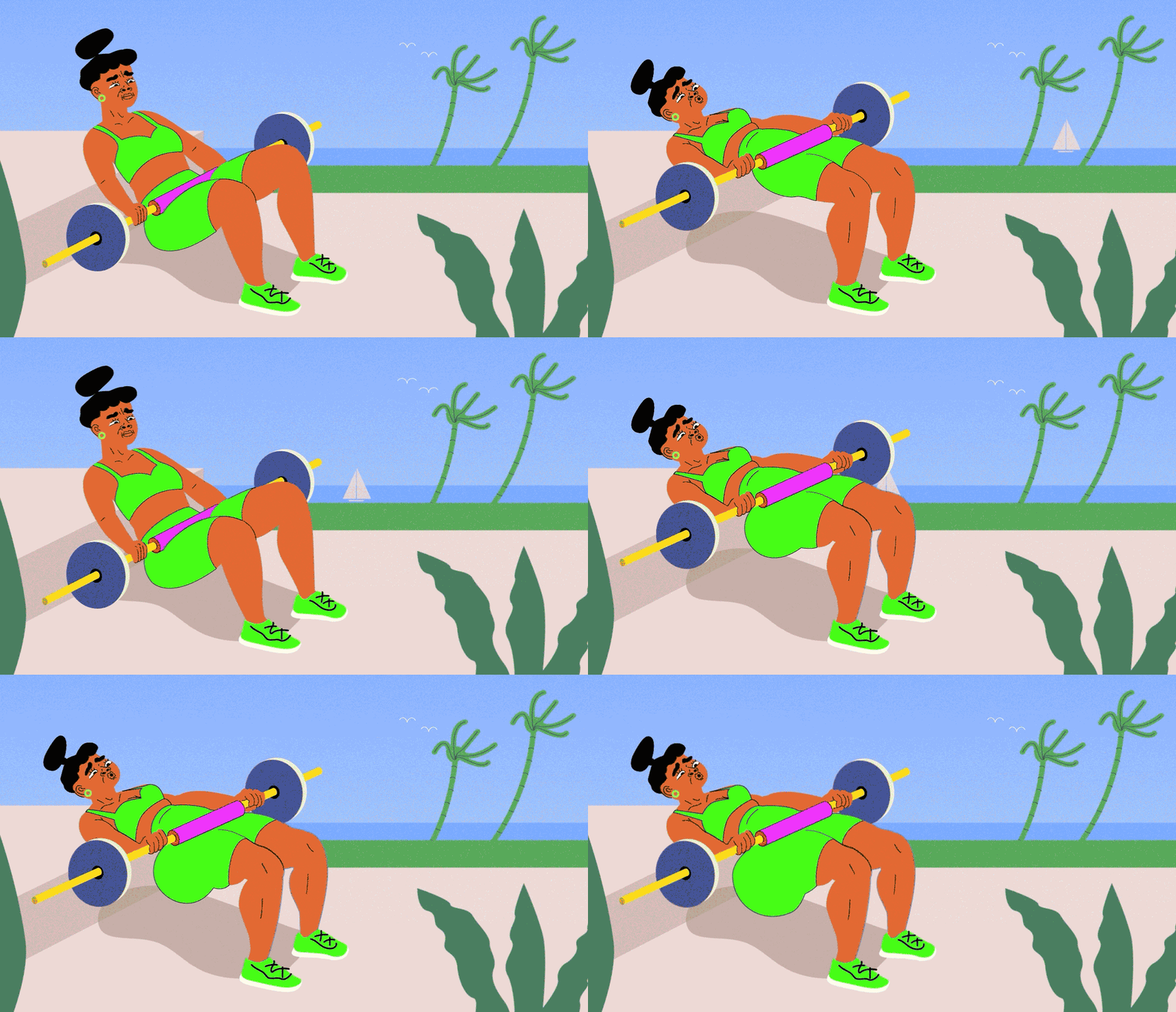
These days, we’re working our butts on, not off. We want bigger, fuller bottoms to cushion our falls, to fill out our jeans and to stabilize our hips, core and back. Your glute muscles are the largest in your body, and they’re also the most important. Got back pain? Having trouble going from sitting to standing? Do your joints hurt? These are all signs that you need to work on your bottom. Strong glutes don’t just look good — they’re essential for posture, balance and injury prevention. They power your walk, protect your knees and keep your lower back from overcompensating. Whether you’re climbing stairs, lifting groceries or simply getting up, your glutes are at work. Neglect them, and you’re setting yourself up for pain and weakness. Good news: You don’t need a gym to strengthen them. A few focused moves done consistently can build strength, reduce discomfort and improve your daily well-being. Here are the top three glute exercises.
Barbell hip thrusts
These are fantastic for isolating and maximizing glute contraction, says Jason Kozma, a personal trainer in Los Angeles. Since your glutes are most active at full hip extension, this exercise builds roundness and lift that squats and deadlifts alone can’t match.
Instructions
With your upper back against a bench and a barbell or heavy weight across your hips, plant your feet shoulder-width apart. Drive your hips upward until your body forms a straight line from your shoulders to your knees. Hold and squeeze your glutes for two to three seconds, then lower slowly. If you don’t have a bench, you can do this from the floor. Lie on your back and raise your glutes so there’s a slant from the top of your knees to your head.
Reps
Do four sets of eight to 10 reps with a heavy weight, then one to two lighter sets of 12 to 15 for pumping and shaping.
Wide-stance barbell squats
With your toes slightly turned out and your knees tracking, stand with your legs wider than your shoulders. This emphasizes the glutes and hips more than a narrow squat. It also allows you to sit deeper into the movement, stretching the glutes under a heavy load. Varying the pace — also called time under tension — builds dense, powerful glutes along with overall leg mass, Kozma says.
Instructions